
Workout Series
Discover the ultimate full-body workout with Mobility Flow, Strength + Flexibility, Strong Core, Turnout & Extensions classes – designed to sculpt, lengthen and strengthen your muscles, regardless of your fitness level or prior dance experience.
These dynamic classes incorporate elements from traditional ballet training to help you achieve the toned and graceful physique of a dancer.
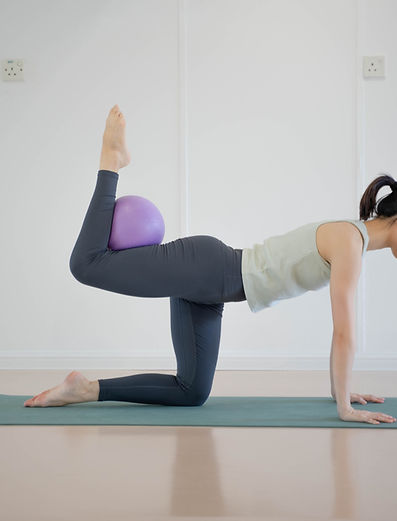
Mobility Flow
A fluid, low-impact class designed to improve joint mobility, coordination, and movement efficiency. Through guided flow sequences, dancers and non-dancers alike develop freedom and control needed for smooth transitions in both ballet and contemporary work.
Strength +
Flexibility
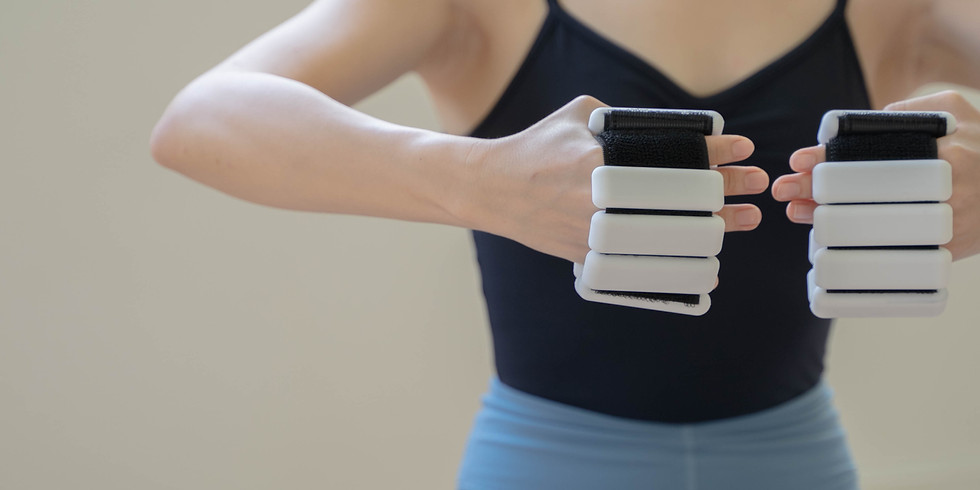
A structured conditioning class combining bodyweight exercises, light weights, and resistance training to build functional strength and active flexibility. Designed to support extensions, jumps, and sustained movement quality, while improving control and joint stability.
Strong Core
A targeted conditioning class to develop deep core strength, stability, and control. A strong core supports balance, turns, lifts, and clean transitions across ballet and contemporary choreography. Expect focused, purposeful work that directly translates to better performance quality.
Turnout &
Extensions
Designed specifically for dancers, this class works on safe turnout usage and controlled leg extensions. Emphasis is placed on alignment, strength, and coordination to improve range without forcing. Ideal for dancers looking to refine classical lines and contemporary movement clarity.
Floor Barre
Build strength, alignment, and control from the ground up. Floor Barre brings ballet-inspired exercises to the floor, helping you refine placement, improve flexibility, and develop deeper body awareness without the pressure of standing work. Move with greater precision, stability, and ease—both in ballet and beyond.
Why should dancers cross-train?
Regular dance class is not enough
Dancers need to develop fitness in all areas of the body (i.e. upper, lower, left, right, core, spine). Conditioning targets exactly that. By doing exercises specifically designed for each muscle group and adding some resistance (weights, bands) to it, conditioning will help build strength, flexibility, endurance, balance and agility needed to perform in dance.
Improve your range of motion
By strengthening through the range of motion that we do have, we now allow our bodies to safely become more flexible. With the improved range of motion and mobility, dancers can enhance their technique, avoid injury, and allow for more commanding movements.
Injury prevention
As a dancer, you know you get your body to move in ways that sometimes defy logic. But all that joint super-flexibility is hard on your body and can also open it up to injury.
Adding conditioning to your routine can help limit your risk for injury. For instance, with strength training, you're improving the strength of not only your muscles, but also your tendons and ligaments, too. This helps to keep your body in the right alignment, protecting bones and joints.
Work on imbalances
Most of the time, dancers work on turning out. When we externally rotate, the front of the body turns on—the quads, the psoas, but we’re not using very much of the back side of the body. Conditioning works to bridge this imbalance by working on internal rotation as well, with parallel exercises like lunges, bridges, etc.
